Opening Lens
I did not start with deception
I entered my master's degree as someone who genuinely loved games. I still do. My early interest was serious games, game development, and the way interactive systems can teach, motivate, and create meaning.
The turn happened through conversation. While speaking with my professor about serious games, I began reading around persuasive systems and eventually encountered deceptive design patterns.
That was the moment the project changed shape.
I did not come away thinking games were evil. That would have been too easy. I came away realizing that games are intentional environments, layered with emotional, economic, social, and behavioural logic.
The Moment The Project Changed
Influence became visible
The strange part was not discovering that games persuade. The strange part was realizing how much of that persuasion had felt normal to me because I had grown up inside it.
Research Focus
Why children became the center
As I moved through the literature and spoke with supervisors and professionals, children became impossible to ignore. They were often described as vulnerable users, but they were not always centered in deceptive design research.
I wanted to understand how children actually reasoned through these systems. Not how adults assumed they reasoned. How they interpreted pressure, reward, fairness, money, risk, and responsibility.
View methodological details
The study focused on children aged 11 to 13. Younger participants would have raised different consent, comprehension, and method challenges. Older participants would have shifted the developmental focus. This range gave me participants who were still young enough for child-computer interaction to matter deeply, but old enough to explain their reasoning in detail.
I intentionally excluded quantitative analysis. This project was not trying to measure children numerically. It was trying to understand how they interpreted the systems around them.
Question And Method
The question was simple. The answers were not.
What are children's perceptions and reactions to games containing deceptive design patterns?
That was the only research question. Scenario-based interviews became the method because they gave children something concrete to reason through: a system, a rule, a reward, a risk, and a choice shaped by the interface.
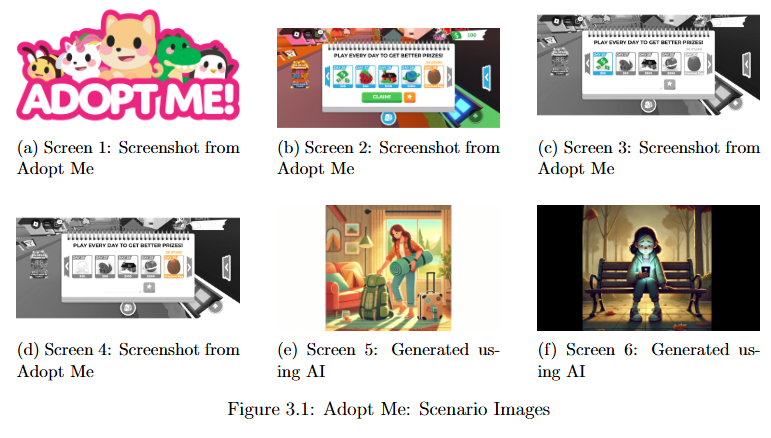
Scenario Material
Concrete scenario materials helped participants respond to specific interface situations instead of abstract questions about manipulation.
View constraints and adaptations
The project had real constraints: a one-year thesis timeline, ethics approval, parental consent, recruitment limits, geographic limits, a narrow age range, and the practical difficulty of testing children inside live games.
Instead of putting children inside live gameplay, I used video-based scenarios. This kept the research ethical, manageable, and consistent while still grounding the conversation in recognizable game situations.
The Children Surprised Me
The first interviews changed the project
I expected interesting answers. I did not expect children to discuss finances, coping mechanisms, multitasking, social pressure, emotional regulation, and practical tradeoffs with the maturity they did.
Interpretation
The interviews were not simple windows into truth
Some responses felt more reflective than responses I had heard from adults. That was exciting, but it also made the research harder.
Were participants speaking from genuine reflection? Repeating ideas they had heard from parents, siblings, creators, or peers? Speaking more openly because the scenarios let them discuss hypothetical children instead of themselves?
I could not flatten that uncertainty. It became part of the work.

Video Scenario
A scenario still used to help participants reason through rewards, daily pressure, and perceived choice.
Analysis
The hardest part was meaning-making
I worked through more than 130 codes. At first, I expected each game and each deceptive design pattern to produce distinct themes. Instead, different games and different patterns often converged into similar emotional and behavioural responses.
The research maturity moment was learning not to force the data into the shape I expected.
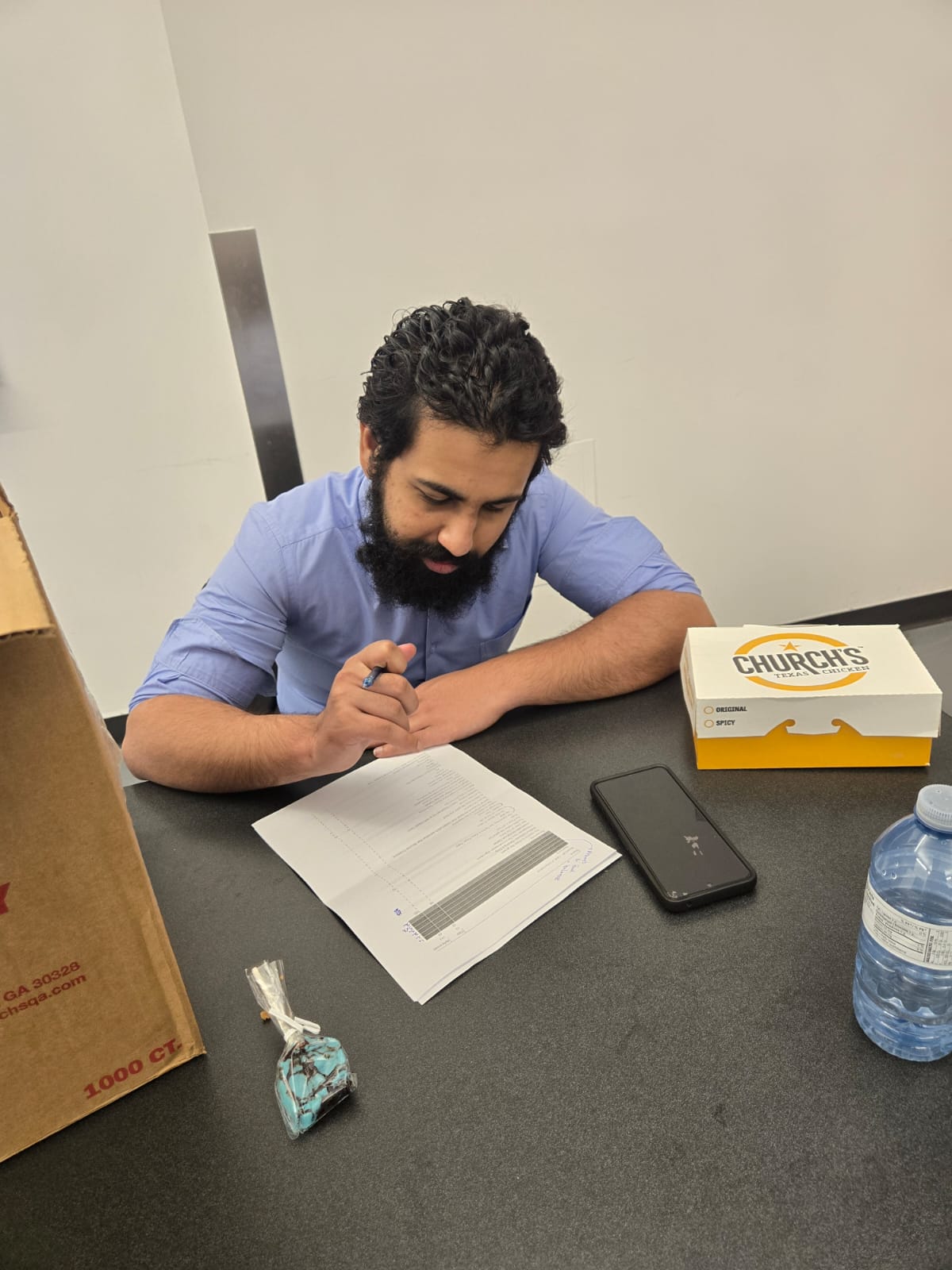
Thematic Analysis
Working through the analysis meant turning many small observations into relationships between pressure, agency, interpretation, and responsibility.
View deeper thematic analysis
Managing mechanics
Participants drew on past gaming experiences, interpreted imposed timelines, and tried to work within system rules.
Real-life workarounds
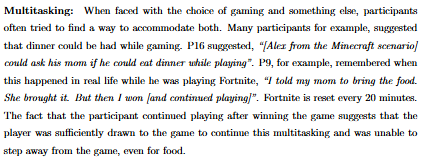
Children described multitasking, asking others to play, changing routines, budgeting, and making practical adjustments outside the game.
Social pressure
They recognized status, peer expectations, and the feeling of choosing freely inside a system that narrowed the choices.
Money and risk
Some noticed financial and social risks. Others assumed the risk was low because the game felt familiar or normal.
Resistance
Some children decided the reward was not worth it, prioritized practicality, or simply chose not to play.
Responsibility
Participants moved between player, parent, developer, platform, and shared responsibility.
Unexpected Finding
Children also defended the systems
One of the most surprising parts of the project was that children often defended the same systems being critiqued.
They reasoned in ways that sounded familiar to me: What else is the company supposed to do? The developer wants people to play the game. Streaks make it more exciting. A game company obviously wants customers.
Sometimes the children could identify pressure and still accept it as part of the deal. Sometimes they defended the business logic. Sometimes they seemed to understand the system almost too well.
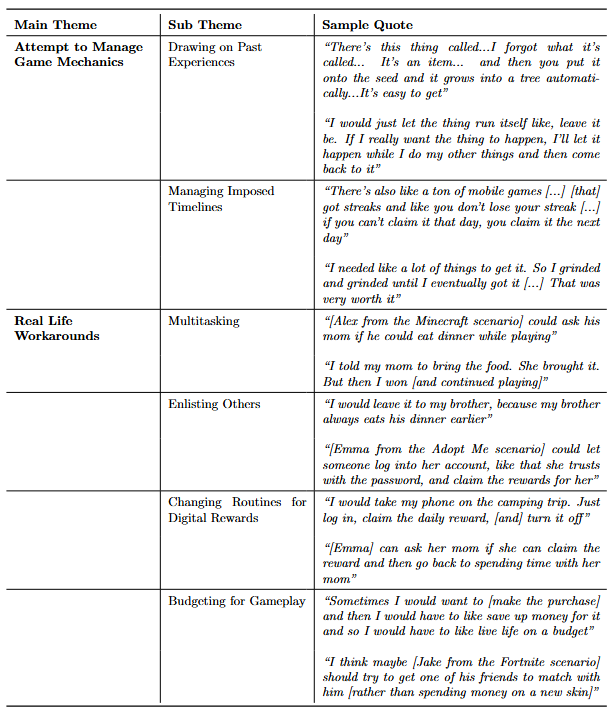
Category Structure
The category structure helped organize themes, sub-themes, and anonymized quotes without losing the complexity of participant reasoning.
The Moral Contradiction
The systems were manipulative. They were also meaningful.
Games created pressure, but they also created communities, memories, friendships, skills, and even careers. That contradiction became the emotional center of the project.
Center Of The Case Study
I still love games. I still value what games gave me. I still imagine my future children playing games. That made the thesis more honest and more difficult.
The point is not that games are bad. The point is that games are more psychologically influential than many people realize, and children are often more thoughtful about that influence than adults expect.
Systems Literacy
The systems became visible everywhere
After the thesis, deceptive design patterns became visible in games, apps, grocery stores, sales, scarcity systems, branding, parasocial mascots, endorsements, discount framing, physical products, and digital interfaces.
I do not see that as paranoia. I see it as systems literacy. Every system was making choices about behaviour.
That changed how I do UX research. I pay more attention to what a system rewards, what it delays, what it hides, what it makes easy, what it frames as normal, and who benefits when the user keeps going.
Implications
What this means for design
The implications are not about removing fun from games. They are about respecting comprehension, agency, and power.
Design for comprehension
Consent is not enough if young users cannot understand the pressure or consequences.
Make conditions visible
Costs, rewards, delays, and consequences should be visible at the moment they matter.
Create real exit points
Children should be able to stop without being punished emotionally, socially, or mechanically.
Treat fairness as usability
Fairness, autonomy, and responsibility are part of how a system is experienced.
Outcome And Future
What the thesis became
This project was submitted, defended successfully, and approved as part of my master's degree. A paper based on the work is forthcoming at ACM IDC 2026 in Brighton, UK.
The tangible outcome was a completed thesis, a thematic analysis, and design recommendations. The deeper outcome was a changed way of seeing influence.
View future research direction
If time and funding were unlimited, I would want to study this longitudinally: how repeated exposure to deceptive design affects children over time, and how their reasoning develops as they grow older.
One question I still carry is whether games sometimes expose children to manipulative systems in lower-consequence environments before they encounter those same systems in adulthood. That is not a conclusion. It is a careful hypothesis, and one I would want to test with humility.
The larger question remains open: how do we design systems that are persuasive, engaging, and meaningful without quietly teaching people to accept manipulation as normal?
The Messy Kitchen
The story above is the clean version. This is the kitchen behind it: the drafts, experiments, notes, screenshots, and research materials that shaped the final direction.
Scenario Material
A figure from the scenario materials showing the sequence of Adopt Me screens used to ground participant discussion.
Video Scenario
A still from a scenario video used to help participants reason through game mechanics, rewards, pressure, and perceived choice.
Thematic Analysis
A process photo from the analysis stage, working through research material and turning participant responses into themes.
Category Structure
A category structure table showing how main themes, sub-themes, and anonymized sample quotes were organized during analysis.
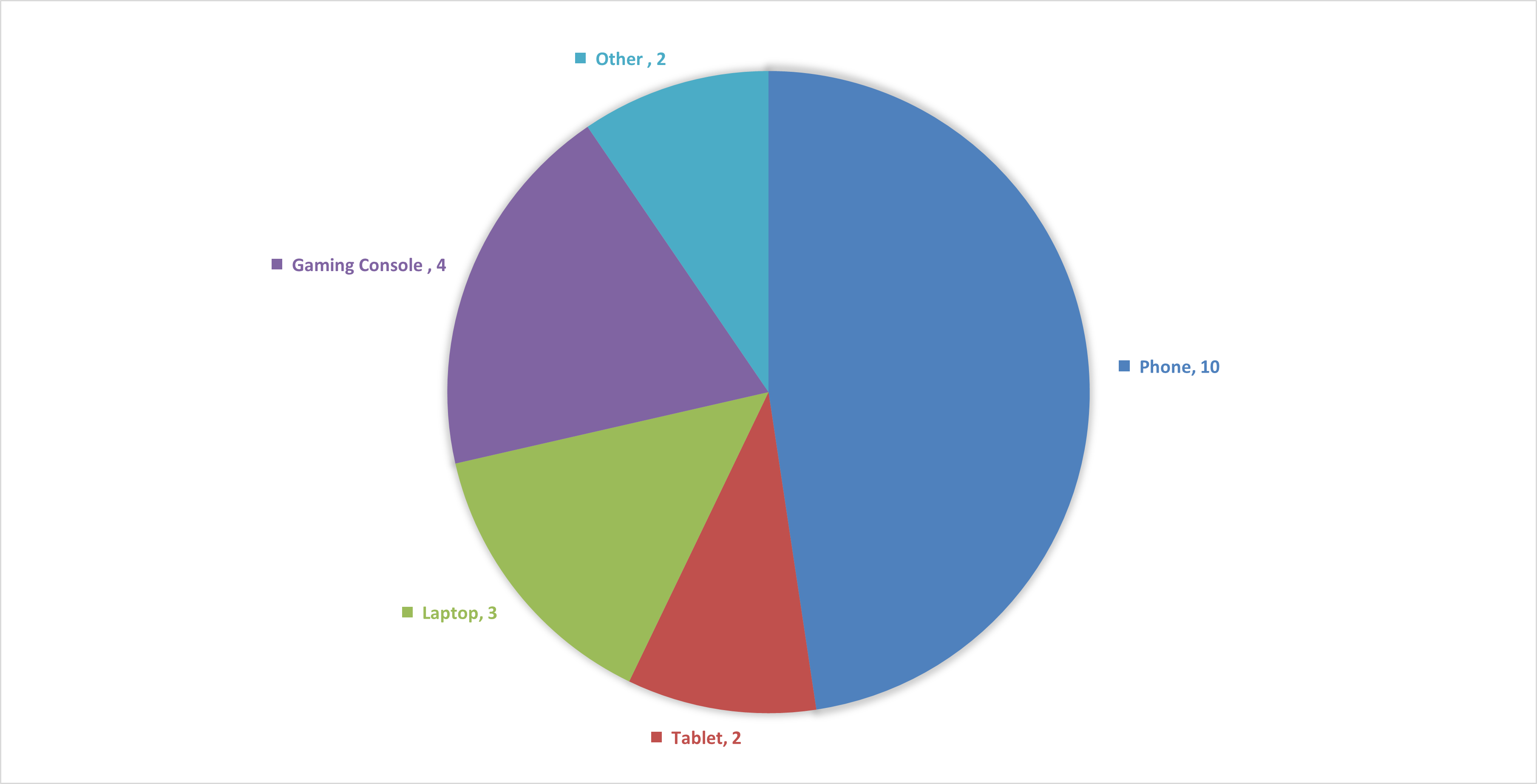
Visual Findings
A recreated visual finding showing participants' preferred gaming devices, with phone as the most common response.
Thesis Excerpt
A selected excerpt from the thesis showing how participant quotes were interpreted within the multitasking theme.